Nonprofit

11 Simple Ways to Improve Your Year-End Giving Campaign

We’re headed into the final weeks of the year, which means nonprofit fundraising is in overdrive. About 30% of nonprofit donations occur during the month of December, so yes—it’s go time! And whether you’re late to the party or have been planning for months, I know you’re all about maximizing your time and effort. So, I’ve outlined 11 simple ways to improve your year-end giving campaign.

Notice I said “simple,” not “easy,” because we all know there’s a big difference! Simple is focused, minimal, or straight-forward. Easy is typically done in a short time period and with little work.

Simple is Joanna Gaines decorating a room effortlessly and beautifully because it’s what she does every day. Easy is me picking up her decor at Target rather than me trying to design a room on my own. (Thanks, Jo!)

So, while some of these ideas take more energy and planning than others, all are time-tested and proven to help increase your donations. Think about what you’ve already got planned, and then take a peek below to see what you can include in your upcoming fundraising campaign. It’s likely that at least one of these ideas can enhance your current strategy.

People are feeling charitable (and tax-deductible) this time of year, so let’s make sure your cause gets their attention.

11 Simple Ways to Improve Your Year-End Giving Campaign

1. Ask For Only One Thing in your year-end giving campaign

Chances are, you’re going to be asking for donations. If that’s the case, ask your tribe to show you the money.

Don’t also ask them to follow you on social media, watch an unrelated video, join your Facebook Group, register for something . . . and, well, you get the point. Keep your emails and communication focused on the one, main thing you want them to do. Any other asks can come later. The exceptions to this rule would be something like a contest where they have to take multiple actions for an entry.

Additionally, you can leave some of these smaller asks such as social media links in secondary spaces like footers. You can also still make some of these requests occasionally on your platforms. Just be sure that you’re creating more content than you are asking for something because it shows that you want to build a relationship.

However, when you are sending an email, posting about your year-end giving campaign, or presenting to a group of people, keep it simple. Ask for only one thing and don’t clutter your message.

Remember, Nonprofits Source says that “30% of annual giving occurs in December.” So, this is no time to confuse people on what you want them to do! Giving them too many options or actions may result in them taking no action at all. Yikes.

Make Sure Your Campaign Gets Seen

2. Evaluate Your NONPROFIT’S Website For Optimal Giving

Even if people typically donate to your nonprofit through social media, text, or an app, you need get your website’s house in order to optimize year-end giving. Many people still give through websites, and if someone is new to you or your cause, they may check out your site before donating through another avenue like texting.

Make sure your campaign is front-and-center on your homepage, your donate button is easy to see and ideally in the top right corner, and evaluate any other pages where giving should be mentioned.

No need to only designate one or two pages for fundraising efforts. Of course, you don’t want to bombard people, but it may be appropriate to create an “event” for your campaign on your calendar page, add a pop up, or even include it on your About page. Additionally, you can create a banner at the top of your site that will display on all pages. (See mine in red at the top?) This is done through the “Hello Bar” plug-in on Wordpress and the “Announcement Bar” in Squarespace.

Want more of an explanation? Take a look at my video on how your website is less like IKEA and more like a mall.

3. Increase Your Promotion Frequency

There’s a tricky balance to this, and I explain it more in this video, but you definitely want to increase your email/social media/video/promotion frequency leading into year-end giving. This practice holds true anytime you launch something new, but especially because you’ll be dealing with a lot of competition during the holidays. Other nonprofits will be combing the interwebs for more donations, too, and lest we forget about all of those unbelievable sales at your favorite retail stores.

The takeaway here is that you shouldn’t send an email in November and December, post the campaign on social media a couple of times, and call it a day. You are going to have to work hard for that money, as the song goes. And you’re going to have to see it through until the end. Give Back Nation states that 12% of annual giving occurs during the last three days of December! So, send those reminders!

The caveat here is for my friends who’ve been so busy working that they let all their marketing and communications efforts fall by the wayside. Is that you? No judgement, but now’s the time to rev up those engines. Start now by sending your audience an email on what’s been happening, posting the latest on social media, and having general update conversations with people. This way you aren’t only going to send them a bunch of requests for money. That’s no bueno.

4. Offer Multiple Ways to Give to your nonprofit

Give your people multiple ways to give. This goes back to the basics of knowing your audience. If you have a younger audience, consider adding the ability to donate via text. Check out these compelling stats from Mobile Cause, including the one that says, “96% of donors use a mobile phone as their primary device.”

If you have an older audience, you might want to consider hopping back on the snail mail wagon. There is no perfect answer here. The right answer is the one that works for your tribe.

Again, you always want to make it easy for them to donate by removing any barriers in their path.

Promote Your Cause with Proven Ideas

5. Add a Bonus

If you’ve got merchandise on your hands, you may want to give donors a gift in exchange for their contribution. You could even have something created just for this purpose, like a mug, tumbler, t-shirt, or jewelry. What do your people love?

People who are invested in your organization and your cause will be delighted to receive swag for their support. Plus, then they’re carrying your message around with them in public. (<— good marketing!)

6. Get Up Close and Personal with your donors

I don’t need to go in-depth on this one, but a face-to-face interaction will always be your best bet when it comes to fundraising. It works better than any sponsor presentation, email, video, or social media post. Get on the calendar of your biggest donors to date, or potential big givers, and make your case over lunch or coffee. Maybe even pay for it!

Another option here is to at least email people personally and start a conversation. Don’t rely on the mass emails that come from your nonprofit. Write specifically to that one person, and make sure they know it’s coming straight from you. (For the right people, phone calls or video chats are also a good option here.)

Don’t have time? This is potentially the most powerful of all the ideas you’ll read here today, so if you don’t have time, I suggest you make it.

7. Get Everyone on Board

Year-end fundraising is an all hands on deck situation! Make sure your board, employees, volunteers, and any other key stakeholders are carrying the banner.

I talk about this topic a lot on the blog and elsewhere as it relates to launching (<— the creation and promotion of something new), but this is a big deal, so it shouldn’t be left to the development or communications department. Everyone needs to be involved!

(For more on this topic, read this post.)

8. Go Out and network

Yes, it’s getting chilly outside, but this may be the prime time to get out there and start cultivating more donors at events, whether you’re hosting them or not. There’s already plenty happening this season!

It’s easy to leave all of the fundraising to your digital marketing strategy, but shaking hands has a powerful impact on people. In fact, this study shows that “a handshake preceding social interaction enhanced the positive impact of approach and diminished the negative impact of avoidance behavior on the evaluation of social interaction.”

A handshake and a smile can put people at ease, and give you an open door for talking about your cause. Someone may not be ready to donate during that first interaction, but you’re paving the way to a future relationship, which is a big win overall.

Free Launch Marketing Checklist

9. Participate in #GivingTuesday (At Least to Some Extent)

Some of you probably love #GivingTuesday, and some of you could care less. Some of you may even be new to the “holiday” as a whole, since it’s been around less than a decade.

Now in its eighth year, this unofficial holiday occurs the Tuesday after Thanksgiving, and celebrates ways people can contribute to causes, whether monetary, through volunteering, or some other type of involvement.

A few of my clients have participated in #GivingTuesday in the past, but most haven’t. What I suggest to them all, however, is to jump into the mix in some way or another. There are tens of thousands of charities participating each year, so why not be a part of the conversation?

You don’t have to come up with a specific #GivingTuesday campaign, but I think it’s a great idea to send an email on this day or the day before, post on social media about your year-end fundraising campaign, and anything else that keeps you in front of your audience while numerous other nonprofits are out there seeking donations.

Even the most generous of us still only have so much money to go around, so make sure you’re getting a piece of that pie.

10. Ask Partners to Promote your year-end giving campaign

If you are lucky enough to have influencers, partners, sponsors, and the like who rally around your cause, it may be time to call in a favor. You may, of course, need to do something for them in return (or at least offer), but if there’s someone who can help you get your message out in the world, this could be a great time to rally the troops.

Let me sing my song again, though: Make it easy for them. Don’t just say thanks, and leave them to put together their own social media promotions and emails. It’s less likely to get done, or the messaging may not be what you want.

Always offer to create whatever resources they may need to share about your nonprofit. If they don’t need anything, great! But if they do, you’ll be the hero!

11. Recruit Someone to Match Gifts

I’ve left this one for last because it’s potentially the hardest. In fact, because we’re already in November, it may even be too late. But depending on your network and resources, maybe not! I’d certainly give it a try. If it’s an option you need to table for now, make it one of your top priorities for next year.

And let me clarify. This idea could include workplace charitable giving with a matching option, or one of those, “Give by December 15th and all donations will be matched up to $50,000” kind of campaigns that is instigated by one generous donor.

According to Double the Donation, “Mentioning matching gifts in fundraising appeals results in a 71% increase in the response rate and a 51% increase in the average donation amount (and that’s prior to receiving matching gift funds).” That stat makes it a big deal!

So, determine your heavy-hitters as well as your corporate partners, and see what it will take to move the needle in your direction. This could be a huge win for your nonprofit!

What else has helped you haul in those end of year donations?


PIN THIS POST FOR LATER:

About 30% of nonprofit donations occur during the month of December, so yes—it’s go time! And whether you’re late to the party or have been planning for months, I know you’re all about maximizing your time and effort. So, I’ve outlined 11 simple way…

Kristi Porter, founder of Signify

I’m Kristi Porter, and I help cause-focused organizations understand and execute effective marketing campaigns so they can move from stressed to strategic. Your resources may be limited, but your potential isn’t. Whether you’re a nonprofit, social enterprise, or small business who wants to give back, I’ll show you how to have a bigger impact.


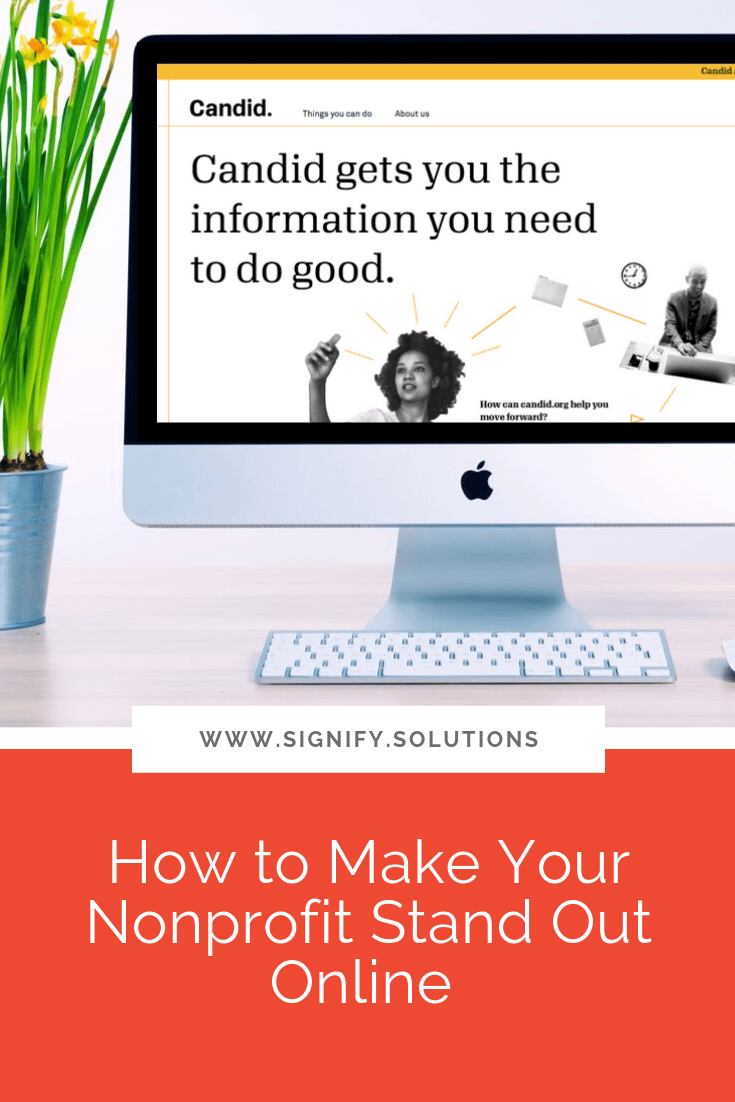
How to Make Your Nonprofit Stand Out Online

Nonprofit friends - If you’ve been wondering how to attract more donors, today’s post will give you a whole new perspective. Right now, you’re out there trying to find new donors in all the nooks and crannies of the internet, at networking events, and in any other place a they might sit still for 10 minutes.

But what if prospective donors could find you instead?

It may sound like a dream, but Madeline Kardos of Candid is going to show you where these elusive donors are already looking for new nonprofits to support, and how you can stand out online in their eyes. This is such great information, and with a little bit of elbow grease upfront, you can show off your good side no matter where people are searching for causes they care about.

How To Make Your Nonprofit Stand Out Online

Your nonprofit has a well-maintained Facebook page and maybe even an Instagram account. You’re probably thinking, my nonprofit looks awesome online, right?

Well, not exactly . . . Although your social media accounts are important pieces of your organization’s online presence, you need to check out other places to make sure your nonprofit looks positively brilliant on the Internet.  

Top 10 Website Mistakes

WHY IT MATTERS

Donors want to know that the charities they give to are legitimate organizations. They also want to know how nonprofits use their donations. More and more, donors are turning to sites such as BBB Wise Giving Alliance, Charity Navigator, GuideStar, and Network for Good to gain information on nonprofits before giving.

For years, millions—that’s right, millions—of people have used GuideStar to research their giving. Today a service of Candid (GuideStar and Foundation Center joined forces in February 2019 to create a new organization called Candid), GuideStar amplifies your nonprofit’s online presence. If your organization is registered with the IRS as tax exempt, you’re already in the GuideStar database. (If you aren’t registered with the IRS, check into getting listed.)

Plus, if your organization is on GuideStar, it’s also on more than 200 charitable giving websites and applications—such as AmazonSmile, Facebook Fundraisers, Network for Good, and all major U.S. donor-advised funds. All of these sites are powered by GuideStar data.

But what do people see when they view your Nonprofit Profile, either on GuideStar or on our partner sites? If you haven’t updated your profile, the information in it will only be from your IRS records. You can, however, gain access to your profile and update the information.

Updating is free. It lets you show that your organization is more than an IRS designation (public charity, private foundation, etc.) or financial ratios. Updating lets you talk about your mission and programs in donor-friendly ways, keep the list of your board and leadership up to date, discuss your goals and strategies, and share contact information.

And when you update on GuideStar, you simultaneously update your information on our 200+ partner sites, all in one go.

Here’s a quick example. I once assisted a man who had spent six months correcting his organization’s address on 80 different websites. Unfortunately for him, GuideStar was his last stop. If he had come to GuideStar six months sooner, all 80 (and more!) of those websites would have been updated much, much faster. Plus, he would have corrected his address on popular crowdfunding sites like Facebook Fundraisers, so if he received a check it would be sent to the right place. 

Enough talk, right? Let’s get down to what you can do NOW to make your nonprofit stand out online.

3 STEPS TO STANDING OUT

1.  Gain Access to Your Nonprofit Profile

Start by becoming a manager for your organization’s profile. For security purposes, we approve who receives access to each profile. Get started with this step-by-step guide.

Please note, we strongly recommend that you create an account on GuideStar using an email address associated with your organization. This proves to us that you’re connected to your organization in the easiest fashion. For example, if I wanted to gain access to Candid’s profile I would use my candid.org email instead of my Gmail address.

Claim Your Profile


2.  Earn a GuideStar Seal of Transparency

As you update, you’ll receive one of our Seals of Transparency. The Seals are based on the information that funders and donors need to make informed giving decisions.

There are four Seals:

  • Bronze provides basic information (i.e., primary contacts, program descriptions, etc.)

  • Silver shows your basic finances

  • Gold explains your long-term goals

  • Platinum illustrates the progress that you’ve made year to year

The amount of information you add to your profile determines which Seal you receive. Once you earn a Seal, you can post it on your website and include it in your marketing materials to demonstrate your commitment to transparency.

Unsure where to start? We have resources for you! Check out what’s needed to earn a Seal of Transparency for your nonprofit. Even better, if you want to draft your responses before adding them to your profile, here’s a profile template you can share with peers or pass along to your executive director.  

Learn More

3.  Share Your Good Work

After you update your profile, let the world know! The more you promote your profile, the more recognition it will receive. Once you earn a Seal of Transparency, you have the ability to share an image of the Seal on your website or in print publications. Plus, we have sample social media posts and press releases for you to use!  


IN CONCLUSION

Once you’ve updated your Nonprofit Profile on GuideStar, your organization will look radiant on not only on Facebook and Instagram, but also on 200+ charitable websites and applications. Updating your profile is a major step forward in creating a positive online presence for your nonprofit and will help potential donors and funders learn more about your organization.

Although we’ve reached the end of this blog post, it’s not where we part ways. You can always reach out to us for help while gaining access to or updating your profile by visiting help.guidestar.org. We hope to hear from you soon!

Fix These Common Website Mistakes

Madeline Kardos, Candid.org

Madeline Kardos is the marketing and communications associate for Candid. She writes all kinds of content and leads trainings to teach nonprofits how to update their Nonprofit Profiles on GuideStar.

Before joining the nonprofit world, Madeline started in content marketing, writing for companies in San Francisco, CA.

Twitter I Instagram I Facebook I LinkedIn


PIN THIS POST FOR LATER:

Make sure prospective donors can find you! Learn about where they’re looking online for nonprofits to support, and how your organization can stand out.

Kristi Porter, founder of Signify

I’m Kristi Porter, and I help cause-focused organizations understand and execute effective marketing campaigns so they can move from stressed to strategic. Your resources may be limited, but your potential isn’t. Whether you’re a nonprofit, social enterprise, or small business who wants to give back, I’ll show you how to have a bigger impact.


How to Wow Supporters After Your Event

If your nonprofit has a big fundraising event on the calendar, and it probably does, this is one post you won’t want to miss! Event planning is extremely popular in the nonprofit sphere, but it also takes a lot of effort and time, am I right?

You absolutely want to make the experience top-notch for current and prospective donors. Please do that first. However, there’s a vital piece of event planning that often gets left out: the follow up. It’s not the most exciting thing to talk about, but I can’t stress it enough.

Having a solid follow-up plan is part of what makes an event strategic for your organization, and not just something you do every year.

It’s also what increases your return on investment (ROI), especially considering events may not be as profitable in the long-term as you might think.

You’ve put so much hard work into planning this event, and an excellent follow-up strategy makes it more effective. What you say and how you say it could mean additional donations, recurring donations, and higher attendance at the next event. That’s why today’s post matters.

And it comes to you from my new friend Erin at Funraise, which a super sweet nonprofit fundraising software built by nonprofit people. (I’ve taken the backstage tour, and it’s pretty awesome!) Okay, back to today’s post. I think you’re going to like it!

How to Wow Supporters After Your Event

Congrats, Fundraiser, the big event day is behind you! Hopefully, you’re propping up your feet and giving yourself a pat on the back for a ginormous job well done. Fundraising events are no small feat, and it can feel awesome when that behemoth is behind you. After you’ve taken some well deserved R&R, it’s time for the next phase of the event. No, we don’t mean cleaning up/organizing the event supplies that've taken over your office. It’s time for event follow up that'll wow supporters and attendees.

Attending an event should be an excellent experience for supporters, and extending that warm, fuzzy feeling beyond the event is an exciting bonus for them. It’s a chance for you to build BFF-status relationships with donors.

Follow up is critical: not only does it give you an opportunity to extend a heartfelt thanks, but it also opens the door for you to establish your nonprofit as an organization that genuinely cares about relationships. And that’s something you can take to the bank.

Streamline Your Fundraising

Follow up strategies for 1 to 7 days after the event

The first phase of event follow up is what happens immediately afterward. Typically this is a thank you for attending and donating (because they donated... right?). If your organization wants to build relationships beyond the event, this is a must.

Here are some ways to say thank you that'll make a lasting impression.


Pick up the phone and say thank you

Calling attendees is an easy thing to do the day after the event that leaves a big impression on donors. If you had a lot of attendees and donors, prioritize your call list by first following up with donors who made the most substantial gifts or strategize by calling first-time donors. If you need help getting through the list, ask a board member to come in for an hour to make some calls.


Send a day-after email to everyone who attended

Use this email to share how much money the event raised and what the funds will be earmarked for. This touchpoint allows you to show attendees the next steps for engagement, such as signing up for your email list or following your organization on social media. Schedule the email in advance so you can relax a tiny bit post-event.


Record personal thank you videos

Did you know there are video services that can help you make a custom thank you video for each attendee and supporter? Services like BombBomb make it possible, and it’s a delightful surprise in someone’s inbox. Short, personalized videos are an unexpectedly wonderful alternative to mass emails if you’re looking for something a little more personal.


Mail a handwritten thank you note

How awesome is it to get a card in the mail these days? Much more awesome than getting endless flyers from the local pizza joint. Make your supporters’ day by sending them handwritten thank you notes after the event. You could even create a custom postcard that includes a powerful image or two from the event, so they have a memento.

Bonus: This is a great engagement opportunity for your board members. Ask them to come by the office and write 10 cards each. You’ll be done in no time.


Jump on the text train

Using the same service that you send text messages with, send out a quick "TY for the amazing night! We hit our fundraising goal!" text. You can point supporters to your website to check out groovy event photos or tease them with the exact amount that was raised. (Sneaky tactic—if you didn't hit your goal, they may send a post-event donation.)

Tip: It can be helpful to block off time in your calendar in advance for event follow up. Also, if you anticipate having a lot of follow up to do, schedule emails, order mailers, or set up text messages before the event. Organize some volunteer or board members ahead of time to lend a hand.

Fundraise The Smart Way

Keeping in touch and building relationships

Follow up with supporters doesn’t end after the initial post-event thank you. You’re now on the path to creating life-long relationships with them, so it’s essential to have a game plan. Here's how you can keep in touch with supporters to build relationships that outlast the event.


Send a survey

It’s super valuable to know what supporters thought of your event. Feedback from people who were there means you'll be able to plan a solidly successful event year after year. Asking for feedback also signals to supporters that you value their opinions and feedback, which in turn builds trust. Put together a short survey that you can send them in the weeks after the event, or as you prepare for next year's big event.


Share impact stories

We heart storytelling. Sharing stories that make your donors’ hearts flutter is a great way to build transparency and show donors the impact of their giving. If you fundraised for a specific initiative or program at your event, find a story related to that.


Ask your supporters to share their giving stories

The social proof of giving stories is solid gold. In your follow up with supporters, connecting your supporters with the results of their giving and having them share is something you can do to engage them and recognize their support.


Add a personal note on future snail mailings

You might send event attendees snail mail down the road: an annual report, a newsletter, or even a direct mail piece. Personalize it by adding a short handwritten note, making the mailer feel less like a mass blast, and more like recognition of the relationship you have with attendees.


Create a video

Video is an awesome way to connect with supporters and attendees. You could create a special year-end video to talk about your organization’s impact and tie in the role your event played in it. These days, video doesn’t have to have a slick production value to be impactful so pull out your smartphone and hit record.

Take Your Fundraising To The Next Level

As you prepare for your event, you probably have pre-event communications and marketing planned. Consider expanding this plan to include post-event follow up for at least three months following the event so you can organize your follow up strategy ahead of time.

Events are an excellent way for your organization to build community, grow awareness, and gain support. Capitalize on the momentum from your event with follow up that shows supporters that you're more than just a one-note organization. Your nonprofit values relationships and you’re in it for the long haul.

If you’re serious about becoming an event follow-up master, check out Funraise’s Events & Ticketing solution where nonprofits can easily set up follow-up email automations via seamless integrations with MailChimp, Constant Contact, and other email marketing platforms. Also manage everything from event registration and ticketing to collecting donations, all in your donor CRM. No more letting prime relationship-building opportunities slip through your fingers!

Learn More About Funraise

Erin Booker of Funraise

Erin Booker is Head of Content at Funraise. Funraise provides innovative and friendly fundraising technology built on a foundation of nonprofit experience. We've found a way to raise the funds and the fun.


Visit www.funraise.org and follow us on Facebook, Twitter, Instagram, and LinkedIn!


PIN THIS POST FOR LATER:

Having a solid follow-up plan is part of what makes an event strategic for your nonprofit, and not just something you do every year.

Kristi Porter, founder of Signify

I’m Kristi Porter, and I help cause-focused organizations understand and execute effective marketing campaigns so they can move from stressed to strategic. Your resources may be limited, but your potential isn’t. Whether you’re a nonprofit, social enterprise, or small business who wants to give back, I’ll show you how to have a bigger impact.


Note: I’m an affiliate for Funraise, which means I may get a small commission from sales purchased through this site. But I only recommend products and services I think are valuable!

Why Nonprofits Need Influencers To Grow (And How To Do It Right)

Have you heard the buzzword “influencer” and wondered what the heck it was? Or if it’s a familiar term, have you struggled with how to find one of these elusive creatures to work with your nonprofit? Well, never fear—today’s post is for you.

While influencers have always existed, the Internet Age has given them new meaning, as well as new ways to capitalize on their popularity. (Cue the Wicked soundtrack!) Social media brought with it a whole host of new job possibilities. I mean, 15 years ago, we all would’ve laughed someone out of the room who said people would pay to watch another person play video games. But, here we are…

So, if getting an influencer to spread the word about your cause is on your To Do List, Kayleigh Alexandra of Micro Startups is going to break it down for you. I’ve seen social impact organizations have great success with this tactic, so I’d encourage you to give it a try and see what happens!

Why Nonprofits Need Influencers To Grow (And How To Do It Right)

Growing your nonprofit can be tough. Aside from competing for attention against so many other worthwhile nonprofits, making donors care about a cause is a big task. Thankfully, influencers are here to make all of that a breeze.

It’s important to make time for your nonprofit marketing, and using influencers doesn’t just save you time—it’s also highly effective. Keep reading to find out how your nonprofit can benefit from an influencer collaboration in 2019.

What are influencers?

While you might not know exactly what influencers are, you’ve probably already encountered them without realizing it. Influencers are social media stars, tastemakers who command significant influence over their followings online.

There are countless examples of online influencers: Kim Kardashian, Marie Kondo, Jake Paul, Huda Kattan, Andrew Bachelor, Gary Vaynerchuk, Joanna Gaines—the list goes on. And for every influencer, there are ten more examples of brands partnering with them for a marketing campaign.

Influencers can be divided into two, broad categories: macro and micro.

Macro-influencers are the A-listers of the influencer world. With social followings in the high hundred-thousands or millions, these individuals are renowned the world over. Consequently, any brand looking to collaborate with them can expect to pay correspondingly high prices.

At the other end of the scale, however, are micro-influencers. These social stars typically have a follower count of around 10-100K.

While they are less well-known than their macro counterparts, micro-influencers enjoy a closer relationship with their followers. They occupy niche areas such as specific beauty subsets (think makeup tips for women with vitiligo), eating gluten-free, or mental health. Their community is intimate and closely-knit, and they’re more affordable as a result of a smaller follower count (though still substantial).

Free Launch Marketing Checklist

Why do nonprofits need influencers?

We’ve established the difference between macro- and micro-influencers. The former has a large following, so partnering with a macro-influencer for a marketing campaign gets your nonprofit seen by the masses.

But this isn’t the goldmine it first seems. The fact is, while macro-influencers generate more awareness, their campaigns lack engagement.

Research shows that when an influencer’s follower count reaches 1K, the ratio of likes to comments peaks. And when an influencer’s followers exceeds 100K, engagement starts to level out.

Micro-influencers, on the other hand, reach a far smaller audience but with much higher engagement. Their close bond with their followers means their content is received on a deeper, more meaningful level.

And for nonprofits, engagement is crucial. You could create a macro-influencer campaign that reaches 10,000 people. But if those people don’t care about the campaign—if they don’t engage with it—then it will fall flat.

Nonprofits need micro-influencers because the success of their initiative hinges on making people care, and influencers can make that happen.

How do I choose the right micro-influencer?

The key to a successful nonprofit-influencer campaign lies in choosing a micro-influencer who aligns with your nonprofit’s values.

Start with what your nonprofit stands for and the work you do, and go from there. For example, if you work with sufferers of anxiety and depression, a mental health influencer would be an ideal choice for your nonprofit.

You can find micro-influencers in a number of ways. There are plenty of influencer marketplaces that let you easily find influencers, sorted by industry, follower count, social profiles, and more.

But for a quick fix, simply scope out other nonprofits operating within your niche and see who they’ve partnered with. Take a look at their blogs and social media accounts to identify any influencer campaigns, and contact the influencer in question to request a collaboration.

Alternatively, you can search hashtags on social media to see what influencers are already talking about, and what causes might be of interest.

Launch Your Influencer Campaign

How to launch an influencer campaign for your nonprofit

You know the what and the why. Read on to discover some great influencer collaboration ideas that will grow your nonprofit.

Get your micro-influencer to tell your nonprofit story.

Micro-influencers are characterized by their special relationship with their followers. The interactions influencers have with them are genuine and meaningful—they are real. As a result, they enjoy an honest, trusting follower relationship.

This is a boon for nonprofits. The general public is numb to marketing, either switching over when an ad comes on TV, or switching off when they see one online. But when micro-influencers extoll the benefits of a nonprofit, their followers pay attention.

Use this special relationship to your own advantage and get your chosen influencer to discuss in depth why they partnered with you. They should outline your various initiatives, highlight the work you do, and even meet and interview someone your nonprofit has helped in the past.

Launch a UGC donation matching campaign.

Most brand-influencer partnerships use a contest, competition, or giveaway to grow their business. And while some nonprofits might benefit from this, an even better, albeit similar, idea is to launch an influencer-led user-generated content (UGC) donation matching campaign.

Donation matching is simple, but effective.

Your chosen influencer gets their followers to share an Instagram photo centered around a theme (e.g. if you’re an animal rights nonprofit, they might share a photo of their favorite animal) with a branded hashtag, following and tagging your account. For every photo shared, your micro-influencer donates $1 (up to a given value).

This strategy doesn’t just give you a quick donation boost. It also invites interaction with your social media followers. It creates a conversation with your followers, involving them with your nonprofit work and making them care.

A UGC donation matching campaign also gives your nonprofit a valuable publicity boost, netting you new followers and growing your Instagram account. Combine this with National Giving Day for an added promotional boost.

Involve your influencer to reach unengaged individuals.

Many nonprofits struggle to make their work seem real to donors. For example, let’s say you’re a nonprofit working with individuals suffering from Lou Gehrig’s disease. You might find it difficult to make people with no experience of the disease connect with your cause on a meaningful level, simply because it feels too distant.

Micro-influencers are the perfect conduit for breaching that distance. Invite your influencer to see first-hand the vital work you do, and encourage them to share their experience on social media.

Of course, sensitivity and confidentiality is crucial here. But when you and your micro-influencer work together to create a nuanced, insightful social campaign, you turn otherwise indifferent individuals into engaged, committed donors.

Influencer collaborations are an effective and affordable marketing strategy for nonprofits. They drive engagement and get your organization seen, helping you reach a whole new audience of potential donors who might otherwise not know your nonprofit. Use the tips above to create an influencer partnership that grows your nonprofit now and well into the future.


Kayleigh Alexandra of Micro Startups

Kayleigh Alexandra is a writer at Micro Startups, your go-to place for charity news and insight. She loves writing about all the great nonprofits, startups, and entrepreneurs that make waves in their industry. For more of her work, check out the blog today @getmicrostarted.

Twitter

Facebook

LinkedIn


Pin This Post For Later

Growing your nonprofit can be tough. Aside from competing for attention against so many other worthwhile nonprofits, making donors care about a cause is a big task. Thankfully, influencers are here to make all of that a breeze.

Kristi Porter, founder of Signify

I’m Kristi Porter, and I help cause-focused organizations understand and execute effective marketing campaigns so they can move from stressed to strategic. Your resources may be limited, but your potential isn’t. Whether you’re a nonprofit, social enterprise, or small business who wants to give back, I’ll show you how to have a bigger impact.