Social Enterprise

The Ultimate Guide to Social Impact Websites

Outside of your people, your website is your nonprofit or social enterprise’s greatest marketing asset. It’s also one of the most important tools you have to help you make a bigger social impact. In fact, it’s so important that we’re going to look at it from just about every angle.

From what you should do before you create or update your website, to writing and designing it, to how to promote it after going live, this is your ultimate guide to social impact websites.

It’s time to build and engage a larger audience, increase your sales or donations, and do more good. This is one tool to help you do just that.

Programming note: Because this is such an important topic, we’ll be talking about social enterprise and nonprofit websites for the next couple of months. As the blog gets updated, this post will be expanded as well.

The Ultimate Guide to Social Impact Websites

Below you’ll find some of our favorite topics to think about when it comes to social impact websites. Whether you’re starting from scratch or updating your site, this information will help you take the next, right step.

Before You Begin Working on Your Social Impact Website

Why Your Social Impact Mission Isn't Enough

For your mission to not only engage the right people, but compel them to act, you need to ensure that you have a clearly defined brand message and brand voice. You may think of your “brand” as only part of your marketing, but your brand informs what you say, how you say it, and what your mission looks like visually. It’s essential to every aspect of your organization.

Read the post . . .

Benefits of a Nonprofit Brand Voice Guide

Wouldn’t it be great if your donors gave you more money? And new donors were easier to attract and engage? There will certainly be times when donors change their giving priorities, don’t connect with the mission, or the timing is just off, but there are other times when it’s possible that we confuse them with our message or don’t give them a clear plan to act. So, what’s the best way to help donors understand and respond to your needs?

Read the post . . .

Know Your Audience

Knowing your audience determines how you communicate your message. Whether you’re talking about your website overall, or individual pages, it’s important to think about the reader first. Consider both the “who” and the “how”.

Read the post . . .

3 Exercises for Evaluating Your Brand Story

Your brand story is the narrative that you use to describe your organization and how it came to be, who you serve and how you serve them, goals for the future, what you stand for, and even the emotions that your mission makes people feel. Your brand story is what helps people decide if they want to take the next step with you.

Read the post . . .

10 Website Mistakes (And How to Fix Them!)

WEBSITE PLATFORM ADVICE

Squarespace: The Pros and Cons

No website platform is perfect, but I’ve been very happy with Squarespace. Madison Beaulieu, half of the dynamic duo that created Signify’s website, breaks down the most important things you need to know about this option.

Read the post . . .

WordPress: The Pros and Cons

Alison Chandler is one of my go-to designers. In this post, she highlights why about 30% of the websites in world are hosted on Wordpress, and why it may be a good option for you.

Read the post . . .

OVERALL TWEAKS For Your Nonprofit website

The Small Nonprofit Podcast: 10 Steps to Upgrading Your Website

Listen to my friend, Cindy Wagman, and I discuss the importance of nonprofit websites, how they contribute to your nonprofit’s marketing, and some tweaks you can make to improve your site quickly and efficiently.

Listen in . . .

DESIGN AND VISUAL BRANDING

Ask the Experts: Design and Branding for Social Impact Organizations

As a copywriter, I love talking words. But, in order to serve you well, I can’t ignore the visual side of your marketing and communications. So, when it comes to design and branding for social impact organizations, I can dish out some pretty good advice, but my secret weapon is the company I keep—including Jaci Lund of Treebird Branding.

Read the post . . .

Ask the Experts: Branding and Design for Nonprofits and Social Enterprises

I get complements on my website and visual branding all the time, and that’s thanks to Madison and Dusty Beaulieu. Madison wrote this post, and I love how she breaks down some important design topics that often trip people up.

Read the post . . .

Want Your Social Impact Website to Look Good? Start Here.

Does your nonprofit or social enterprise website look like it’s worthy of the dollars you’re asking people for, or does it look like you’re still trying to get your act together? Let’s talk about a simple tool that will help you look like a million bucks (even if you aren’t). Without it, your organization can unknowingly communicate that you’re an amateur.

Read the post . . .

Copywriting FOR NONPROFITS AND SOCIAL ENTERPRISES

4 Tips for How to Become a Better Writer

As a copywriter with almost two decades of experience, one of the questions I get asked a lot is how to become a better writer. From grant proposals to product descriptions to blog posts to websites and more, you have a lot to say, and it needs to be said well in order to gain more support for your nonprofit or social enterprise. Learning how to convince and compel with the written word is not just an essential skill, but one that stands the test of time.

Read the post . . .

Advice From The Editors: Avoid These Writing Mistakes

I asked a few of my favorite editors to explain some common writing mistakes, which will allow you to spot any weaknesses you may have, and improve them. (Basically, here's how you can up your writing game in just a few minutes!) Any corrections you can catch now may cause you to not only improve your marketing, but retain customers and donors in the future.

Read the post . . .

7 Tips You Need to Know to Write a Better Website

Designing and writing content for your website can seem challenging, but my former intern, Megan Westbrook, is going to walk you through the most important, and sometimes overlooked, aspects that will make your website effective, navigable, and memorable.

Read the post . . .

How to Rewrite Your Website in One Week

In this guest post for Candid (formerly Foundation Center and Grantspace), I outlined a simple process for rewriting your website in one week. Though written to nonprofits, anyone can make good use of this process. It’s an audacious goal, I know, but if you’re short on time and highly determined, you can make it happen!

Read the post . . .

Why The Words On Your Site Matter As Much As the Design

In this guest post, I emphasize why you should not only consider the look of your website, but what it says. I also give you a few tips on how to make the copy (<— the words on your site) even better. And, yes, there are some budget-friendly options!

Read the post . . .

Are You Making These Website Mistakes?

Marketing Must-Haves

8 Creative Ways to Gain More Email Subscribers

Between all the blogs, online shops, and websites, all of our inboxes are already crowded with marketing emails asking for sales and donations, and the old classic “Sign up for my newsletter!” call to action just isn’t cutting it anymore. Here are eight creative alternative ways to get new email subscribers and not get sent to spam.

Read the post . . .

NONPROFIT CONTENT MUST-HAVES

5 Donor Communication Essentials

No matter what type of donor you are talking to, nonprofits need to consistently communicate with donors, while at the same time targeting the specific message that prompted the donor to initially become engaged. Keeping everyone informed may very well graduate them from one level of supporter to another. Thanks to Amy Crowell for this post!

Read the post . . .

BLOGGING FOR SOCIAL IMPACT ORGANIZATIONS

4 Ways to Help Donors and Customers Find Your Social Impact Mission on Google

Now that the initial excitement of your nonprofit or social enterprise launch has worn off, your website isn't getting as many clicks as you’d like and it seems that all your marketing efforts are falling flat. You know that you have the power to change lives, but people just aren’t finding you. What if I told you there’s a way to help more people find your amazing cause online?

Read the post . . .

5+ Reasons Why No One is Reading Your Blog

Does this sound familiar: Someone lands on your little labor of love, maybe skims a little, and then promptly leaves. Here you find yourself with a blog post that took precious time and energy, but didn't actually get the job done. It's finished, but it's not effective. Here are a few blog writing tips that will help ensure your post gets read, and better yet, acted on. 

Read the post . . .

How to Generate and Organize Content for Your Blog

Blogging is the “meat and potatoes” of the internet right now and, if it’s not already, it should be an important tool in your content marketing tool belt. Blogging builds your audience, brand image, and increases your visibility on the internet. It’s also a very easy and practical way to show off your expertise. Check out this advice from former intern, Michael Banks, on how to revamp your organization’s blog, and make it a regular part of your social enterprise or nonprofit marketing strategy.

Read the post . . .

Should Your Nonprofit Have a Blog?

Blogs seem to be a particular pain point for nonprofits. There is either pressure to create the content (and resentment when it doesn’t happen), or so much overwhelm with regular responsibilities that a blog never gets off the ground. So, what are you to do?

Read the post . . .

12 Questions That Inspire Content Creation

You know you should be reaching out to your audience on a regular basis, but you’re just not sure what to say. It’s a common problem, and one I get asked about a lot. Coming up with a constant stream of topics can be daunting, especially with everything else on your plate. So, where can you find inspiration at any given moment—especially when you’re not feeling it?

Read the post . . .

Outsourcing Your Website COPYWRITING OR DESIGN

Should You Invest in a Copywriter For Your Nonprofit Website?

Do you actually need a copywriter for your nonprofit website? If you’re creating your first site, or relaunching a new one, this question may have already popped into your head. And just because I’m a copywriter that specializes in nonprofits, social enterprises, and social impact companies, my answer is not going to be an automatic, “Yes.”

Read the post . . .

Why Free Help Isn't Always the Best Option

Just because someone offers to help you write or design your website for free doesn’t mean you should take them up on the offer. Let me explain why.

Read the post . . .

Want to Grow Your Nonprofit or Social Enterprise? You Need Help.

It's not easy to decide to spend the money, allocate your resources differently, or bring someone new into your process. But I believe this one decision can make all the difference. And guess what? It may not even require hiring more staff.

Read the post . . .

Legal Considerations For Your Website

2 Simple Ways to Keep Your Website and Work Protected

While this may not be the most exciting topic to discuss, it’s super important! You need to protect the time, money, and effort you’ve put into your website. Besides, you have your mission to think about, not to mention the secret sauce of the way you work. There’s also any proprietary photography and other assets. It’s all those details that add up to your beautiful and unique brand. Let attorney Christina Scalera explain why you shouldn’t leave your website unprotected.

Read the post . . .

Promoting Your New Social Impact Website

Signify’s Launch Marketing Checklist

Having a beautiful, new website isn’t the final step. At the end of the process, you should promote the gorgeous thing to your donors, customers, and key stakeholders. This checklist has pages of marketing ideas for exactly how you can share your big news.

Get the checklist . . .

How to Make Time for Marketing

Need to promote your new website, but always find that something else takes priority? Here are four of my favorite ways to make your marketing actually happen.

Read the post . . .

Get Found on Google

My friend, Meg Casebolt, can teach your nonprofit or social impact company how to get found on Google through SEO (Search Engine Optimization). Though SEO can get pretty complicated, Meg is a patient and caring teacher, and shows beginners how to become pros through simple and strategic steps. I want you to have a terrific website, but I also want your website to get found by the right customers and donors.

Learn about Attract & Activate . . .


We’ll be posting a lot more about nonprofit, social enterprise, and social impact websites over the next few months, and will update this post along the way. Stay tuned!



PIN THIS POST FOR LATER:

Updating or creating a new social enterprise or nonprofit website? Here are oodles of resources to not only help you design a gorgeous site, but have a bigger social impact.

Kristi Porter, founder of Signify

I’m Kristi Porter, and I help cause-focused organizations understand and execute effective marketing campaigns so they can move from stressed to strategic. Your resources may be limited, but your potential isn’t. Whether you’re a nonprofit, social enterprise, or small business who wants to give back, I’ll show you how to have a bigger impact.


Top 5 Blog Posts Of 2019

It’s been quite the year for nonprofits, social enterprises, and other social impact organizations! With every passing day, we see more people supporting causes, both personally and professionally. It’s an exciting time!

Likewise, this was a great year here on the blog and for Signify. There were some tremendous guests posts and contributors, and I’m grateful for all of the words of wisdom and shared advice. I learned a lot, and I know you did, too.

So, before we enter the next decade, let’s take a look back at this year’s five most popular posts. From nonprofit event marketing to utilizing influencers to empathy for social impact organizations to Squarespace tips to public speaking tools, there is a wealth of information below to help you succeed.

Wishing you a wonderful holiday season!

Signify's Top 5 Blog Posts of 2019: Resources For Nonprofits and Social Impact Companies

1) How to wow your supporters after your event

If your nonprofit has a big fundraising event on the calendar, and it probably does, this is one post you won’t want to miss! Event planning is extremely popular in the nonprofit sphere, but it also takes a lot of effort and time, am I right?

You absolutely want to make the experience top-notch for current and prospective donors. Please do that first. However, there’s a vital piece of event planning that often gets left out: the follow up. It’s not the most exciting thing to talk about, but I can’t stress it enough.

Having a solid follow-up plan is part of what makes an event strategic for your organization, and not just something you do every year.

It’s also what increases your return on investment (ROI), especially considering events may not be as profitable in the long-term as you might think.

You’ve put so much hard work into planning this event, and an excellent follow-up strategy makes it more effective. What you say and how you say it could mean additional donations, recurring donations, and higher attendance at the next event. That’s why this matters.

And it comes to you from my new friend Erin at Funraise, which a super sweet nonprofit fundraising software built by nonprofit people.

Read the full post . . .

Get Weekly Blog Posts to Support Your Work

2) Why Nonprofits Need Influencers To Grow (And How To Do It Right)

Have you heard the buzzword “influencer” and wondered what the heck it was? Or if it’s a familiar term, have you struggled with how to find one of these elusive creatures to work with your nonprofit organization? Well, never fear—this post is for you.

While influencers have always existed, the Internet Age has given them new meaning, as well as new ways to capitalize on their popularity. (Cue the Wicked soundtrack!) Social media brought with it a whole host of new job possibilities. I mean, 15 years ago, we all would’ve laughed someone out of the room who said people would pay to watch another person play video games. But, here we are…

So, if getting an influencer to spread the word about your cause is on your To Do List, Kayleigh Alexandra of Micro Startups is going to break it down for you. I’ve seen social impact organizations have great success with this tactic, so I’d encourage you to give it a try and see what happens!

Read the full post . . .

3) How to Use Empathy to Make a Social Impact

For a lot of us, when we think of selling, the word “empathy” doesn’t come to mind. In fact, for many in the cause-focused space, particularly nonprofits, selling (just like marketing) is a bit of a bad word. However, it shouldn’t be.

If you have something that someone else needs or wants, isn’t that a good thing? That’s where it all begins.

One of my spring interns, Rima Patel, will tell you how empathy intersects with the sales process, particularly the selling of products. I think this will not only be insightful, but good news for many of you.

You’re already leading a nonprofit, social enterprise, or other for-profit doing good, which means that empathy is at the core of what you do. This info takes it one step further, allowing you to see how empathy can be the glue that holds your triple bottom line together.

Read the full post . . .

4) Squarespace: The Pros and Cons

This post comes from my friend, Madison Beaulieu, who is a graphic designer and half of the dynamic duo, Mad + Dusty. She and her hubby created not only my logo and branding, but my website as well.

Madison and Dusty only design in Squarespace, and because I wanted to work with them, I went with SS as well. It’s been a great decision, and if re-branding or launching a new website is on your list, I’d urge you to take a look at this platform.

And to get you started on your research, I’ve asked Madison to review the pros and cons of Squarespace. No website platform is perfect, but there are a lot of features she and I both love about SS, and maybe you will, too.

Read the full post . . .

5) Want To Do More Speaking? This Is A Must.

Even with all the newfangled technology at our disposal, public speaking is still one of the best ways to get the word out about your cause. It’s an oldie, but a goodie. Plus, with the aid of technology, you now have more options than ever to speak publicly. It could be on a stage, radio, television, podcast, or video interview.

I repeatedly hear from clients and friends how their donations and sales were boosted after a speaking gig. That reason alone makes it a high priority for a lot of social impact organizations. And, if that’s the case for you, I’d like to give you one tip for making every speaking opportunity easier for both you and your host.

Read the full post . . .

Looking for more popular topics? Here are some of my readers’ all-time favorites:

12 Unique Launch Ideas You'll Want to Copy

What Do Successful Launches Have in Common? 

What You Need to Convince Potential Sponsors and Partners

10 Tools to Make Your Small Business Look More Professional (Most Are Free!)

5 Reasons Why Giving Back is Good For Business


PSST: Don't forget that you only have a few more days to enter to win a Communications Audit and Strategy Session, valued at $750! Resolve to have a stronger marketing strategy.


PIN THIS POST FOR LATER:

Signify's Top 5 Blog Posts for 2019: Resources for Nonprofits and Social Enterprises

Kristi Porter, founder of Signify

I’m Kristi Porter, and I help cause-focused organizations understand and execute effective marketing campaigns so they can move from stressed to strategic. Your resources may be limited, but your potential isn’t. Whether you’re a nonprofit, social enterprise, or small business who wants to give back, I’ll show you how to have a bigger impact.


How to Use Empathy to Make a Social Impact

For a lot of us, when we think of selling, the word “empathy” doesn’t come to mind. In fact, for many in the cause-focused space, particularly nonprofits, selling (just like marketing) is a bit of a bad word. However, it shouldn’t be.

If you have something that someone else needs or wants, isn’t that a good thing? That’s where it all begins.

Today, one of my spring interns, Rima Patel, is going to share how empathy intersects with the sales process, particularly the selling of products. I think this will not only be insightful, but good news for many of you.

You’re already leading a nonprofit, social enterprise, or other for-profit doing good, which means that empathy is at the core of what you do. This post will take it one step further, allowing you to see how empathy can be the glue that holds your triple bottom line together.

How to Use Empathy to Make a Social Impact

No one will deny that the key to creating a successful product is by thinking like the consumer. Putting yourself into their shoes and figuring out what they want can help make your great idea even more desirable. This concept is not unfamiliar to us; in fact, it’s something we aim to practice in our day-to-day lives. Whether it’s individuals trying to build strong relationships or cause-focused organizations trying to connect with consumers, empathy is essential.

Empathy is the ability to understand and share the feelings of others. Empathy is the difference between feeling for someone and feeling with them. Acknowledging feelings from shared experiences connects us as humans, beyond all the ways in which we separate ourselves—and that’s special. So special that it has the power to change lives and make an impact.

Maybe you’re an entrepreneur and you want your consumers to have an emotional connection to your product. Maybe you’re a nonprofit and you are trying to fix a social issue by inspiring others. Or maybe you’re a social enterprise and you just want to do more good. How can you use empathy to make a social impact?

Empathy can push you to create solutions that help others, but it can also push others to help you and your cause.

MARKETING PLAN TEMPLATE

Empathy in the design process

A human-centered approach to innovation

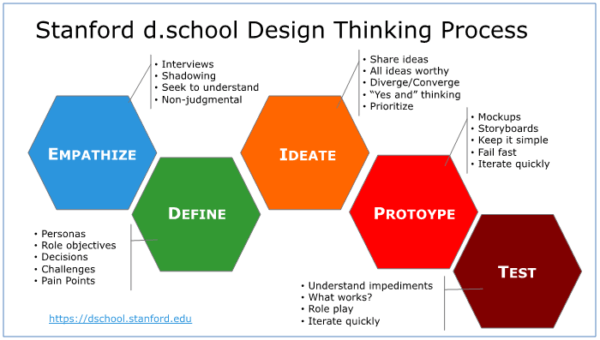
Design thinking is a popular process that many social enterprises use today to creatively solve problems and make social impacts. This process takes a human-centered approach and involves five steps: empathize, define, ideate, prototype, and test.

This semester, my Intro to Entrepreneurship professor decided to focus her class around the design thinking process, giving us the task of creating a product that would help solve the issue of climate change on campus. After the project was over, in a class with almost 300 students, we all came to the same general consensus: the empathize stage was the most important.

At first, many of us had a lot of great ideas, but the empathize stage made us quickly realize that our ideas could be better.

We all knew the problems associated with climate change and we all knew the different methods to prevent it, but what we didn’t know was how much people were actually willing to do. We found that college students want to help the environment, but don’t want to go out of their way to do it. You’ve probably seen something similar with your audience.

We realized that methods requiring the consumer to take some action like using water refill stations or compost bins don’t go as far as methods that don’t require the consumer to take an action, like putting motion detector lights in dorms. Creating the most value for our consumer requires using empathy to understand the best way to solve the problem.

The empathize stage not only helped us understand the consumer and how they felt about the issue to make the most efficient product, but helped us understand what steps they might actually take. Without empathy, our product might have ended up useless, unrealistic, and ultimately unsuccessful.

So, how do you use empathy in the design process? The first step is to ask questions.

Ask yourself:

  • What do you know about the problem?

  • What do you not know?

  • What are your assumptions?

Then ask others:

  • How do they feel about the problem?

  • How does it impact their life?

  • What are they willing to do about it?

These insights will help you understand the problem, who is involved, and how you might go about solving it in a way that brings others into the process for a more successful solution.

We all have great ideas that we want to see come to life, but if we want to be as successful as we can, it’s necessary that we open our ideas to other perspectives. Using empathy, you can see what would work and what would not, how people react to and feel about your ideas, and how to make them better.

There are many solutions to a problem, but the best solution is the one that begins with empathy.

FREE MARKETING PLAN TEMPLATE

Consumer empathy

Stop marketing products, start marketing feelings

Today, consumer empathy has become quite popular because companies are starting to realize its impact. If people have an emotional connection to a product, they are far more likely to buy it. If people share the same feelings as an organization, they are far more likely to support it.

Consumer empathy makes people feel less like consumers and more like humans, and that appeal is strong enough to make a positive impact on businesses and on the world.

Consumer empathy involves not only understanding the desires and struggles of the consumer, but also sharing those feelings with them. A great example of consumer empathy is a commercial for Cardstore by American Greetings in 2014. In order to promote their website, American Greetings sparked a common, shared feeling—the love we have for our mothers—and used it to help the audience create an emotional attachment with the brand. With this commercial, American Greetings was marketing a feeling, not a product.

Another great example is TOMS, a shoe company that built its brand on the concept that for every pair of shoes sold, there was also a pair given to a child with no shoes. Growing up, I remember seeing so many TOMS flags hanging up in bedrooms. Why were people so inclined to hang a shoe brand up on their wall?

The flag represented a feeling, an emotional attachment to the product, and a sense of pride for doing something good. TOMS recognized the power of making every person who purchased their shoes feel like they made a significant impact, and were part of a solution to a big problem. Today, TOMS continues to use consumer empathy to discuss other important social issues, like gun violence.

Now, it might seem like empathy is an obvious tool for marketing products. Of course thinking like the consumer is necessary for creating something that is valuable and relevant to them. Unfortunately, many companies still lack this skill.

Pepsi, for example, aired a commercial in 2017 amidst the rise of the Black Lives Matter movement. The commercial involved Kendall Jenner joining an ambiguous protest and sharing a Pepsi with a police officer, sparking unity and excitement among everyone. Pepsi received severe backlash, taking down the ad several days later, and responses to the commercial gave a clear understanding as to why. A former organizer for BLM said, “No one is finding joy from Pepsi at a protest.” Bernice King, daughter of MLK Jr., tweeted, “If only daddy knew the power of #Pepsi.” To make things worse, the face of the ad was a rich, white supermodel who has no history of being an advocate for BLM, or any other social issue for that matter. Pepsi failed to understand their consumers and how they feel about the issue, which is what made the ad unsuccessful.

So, what did Pepsi do wrong? Pepsi’s commercial was trying to ignore the problem. Its message does not fall far from, “Why can’t we all just get along?” It provides a “solution” without actually acknowledging the existing problem of police brutality that some black people face everyday in America.

Empathy goes beyond just understanding someone's feelings; it requires learning to share them, too. Pepsi attempted to use a current, popular trend in social justice to promote their brand and make more money. Their mistake was leaving out empathy, and it was a mistake they could have avoided had they taken more time to know their consumer.

Using empathy in marketing involves understanding how your consumer feels, but it also involves understanding how your consumer will react. How do they want to feel, and can you make them feel that?

MARKETING PLAN TEMPLATE

Using empathy to create social change

How feelings can change the world

The beauty of empathy is that it affects all of us.

Whether we are selling or buying the idea, it makes us all feel something. Empathy reminds us that we are all human and that we share experiences and feelings. It has been a tool used around the world to make individual problems feel universal.

Empathy allows consumers to feel like they are being heard and understood, that they are not alone, and that there are people out there trying to solve their problems. It sparks inspiration and motivation for people to work towards the things they care about.

As entrepreneurs and innovators, it is essential that we practice empathy in all aspects and phases of our projects—from idea to design to marketing. So, ask questions and open your ears. Understand who you’re working with and what they’re feeling.

Remember that empathy involves shared experiences, so remind yourself of your feelings and why you got involved with your cause to begin with. Keep in mind that the product or the profit isn’t special, but the feeling it invokes and how those feelings might eventually change the world is.

Developing Your Empathy Muscle

Empathy 101

One question that may have come up in reading this post might be something like, “Is it necessary to have empathy if others around me already do?”

In other words, is access to others with empathic skills just as valuable as learning those skills for yourself? In my opinion, no. Empathy is a skill we want to individually develop because it is a skill we can use in all aspects of our lives, not just work.

Having access to others with empathy is a great way to learn empathy; however, relying on others for empathy to make your ideas better only limits yourself.

Empathy isn’t just meant to benefit your business. It can be the very thing that motivates and inspires you when approached with a challenge or failure. Learning and practicing empathy puts things into perspectives you might never see otherwise, and that’s an important skill everyone should try to have.

If you want to develop more empathy, here are four recommendations:

  • As mentioned, hang out with people who have empathy. Surround yourself with people who challenge you to improve.

  • When you are around people who are more empathetic than you, ask questions that will help you understand their perspective and how they identify with the emotions of others.

  • Read more literature. According to research, fiction can make you more empathic and improve your EQ, or emotional intelligence.

  • Travel to new places. Putting yourself in unfamiliar environments and around different cultures is a great way to get out of your comfort zone and develop an appreciation for others.


Rima Patel

I’m Rima Patel, an upcoming senior at North Carolina State University, majoring in Sociology with minors in Business Administration and Nonprofit Studies. My ultimate goal in life is to do good and help people, and right now I’m doing that through marketing for nonprofits.

I hope to make significant impacts on social issues through innovation and social entrepreneurship.

LinkedIn


PIN THIS POST FOR LATER

Empathy can push you to create solutions that help others, but it can also push others to help you and your cause.

Kristi Porter, founder of Signify

I’m Kristi Porter, and I help cause-focused organizations understand and execute effective marketing campaigns so they can move from stressed to strategic. Your resources may be limited, but your potential isn’t. Whether you’re a nonprofit, social enterprise, or small business who wants to give back, I’ll show you how to have a bigger impact.


Your Budget: Go From Cursing to Championing

One of the reasons I love inviting guests to post on this blog is so that they can talk about topics that I probably wouldn’t address myself. And right at the top of that list is budgets! Numbers are something I always struggled with in school (while I excelled in English), so it’s better for both of us that I stick to what I’m good at.

Enter Steve Fredlund. He and I met several months ago in a Facebook Group, and when I saw that one of his areas of focus was budgeting and money management for nonprofits and small businesses, I jumped at the chance to feature his expertise.

I really loved the way Steve talks about “transformational” budgeting in this post, and think it will not only shed some light, but challenge your social impact organization to value money differently in the process.

Your Budget: Go From Cursing to Championing

BUDGET. A 6-letter swear word to many nonprofit leaders and small business owners. It’s about penny-pinching and the restricting of ability to get things done. It’s the mechanism by which a number-crunching, introverted analytic hinders team creativity. Right? 

Yes. Because most of us see it this way, this is precisely what it becomes. Consider how budget discussions and approval are communicated in your organization. For many, it sounds something like, “Well, it’s that exciting time to set the budget again,” or “Sorry, guys and gals, we have to work on the budget,” or “Let’s get the budget stuff done so we can get on to the real stuff we need to talk about.” 

21 Free or Cheap Marketing Ideas

Why You Need to Rethink Budgets

Budget communication both reflects AND creates culture. It gives insight into leadership perspectives on budget, which gives insight into how leaders think about budgeting as a potential tool to move the organization forward. And usually, budget communication is extremely negative or, at minimum, apathetic. But your cash flow is an asset and it is your responsibility to leverage that asset as effectively as possible in support of the overall mission and strategic priorities of your organization. Anything short of that is a suboptimal use of one of your biggest assets, and is a gap in your overall leadership. 

Your finances carry vast amounts of potential energy, just waiting to get released. Your job as a leader is to recognize the full potential energy and release it to maximize achievement of the vision and strategic priorities. I want to encourage you to shift your paradigm about finances—to recognize that great organizations are able to fully release their power and leverage it for success.


3 Budgeting Exercises for Social Impact Organizations

Here are three things you can do to increase the value of your budgeting process, while also changing your perspective about the role of finances in your nonprofit or social enterprise:

  1. Strategy-based budget.  List out all of your major strategies, goals, or initiatives. Then assign each a percentage (totaling 100%) indicating how you WISH all of your available funds were allocated. Do this without regard to your knowledge of the current budget and only consider non-fixed costs. Basically, you are saying, “This is how I wish all of our discretionary spending was allocated.” Then, take this to your finance team and ask them to complete this exercise with the actual spending; have them include a bucket somewhere for the “fixed costs,” and with all remaining expenses, have them allocate out to the same categories you defined. Compare what you find. Eventually, I encourage organizations to create budgets starting first with developing a desired allocation of resources and then building the budget; but for now, this exercise will provide insight into any major disjoints in spending. It will also help you realize how many of your expenses are fixed, to see if there is any way to move spending into discretionary.

  2. Gain outsider perspectives.  An interesting exercise is to give your current budget (or actual spending) to several people unfamiliar with your organization and ask them what they think your vision and priorities based on your budget. You can get tremendous insight from this exercise. This is similar to having new people to come into your building or office and ask what they think your priorities are based on your environment; it creates fascinating discussions.

  3. External research. It’s amazing to me that very few nonprofits and social enterprises have an understanding of how similar organizations are allocating their budgets. I ask, “How does this compare to your competitors?” or “How does this compare to similar nonprofits?” and rarely do they know. Comparing to others can provide great insights, not only for competitive advantage, but to start the conversations about how you could become more effective in your spending.

 There are many more considerations in maximizing your financial investments, and improving the perception of the role of budgeting, but these three are a good start. How you spend your money is more than just a necessary evil. It is as important as the staff you hire, connections you make, and products or services you provide. Every dollar of your revenue is an asset; are you investing it in a way that maximizes your impact or helps you best reach your goals?

Free and Cheap Marketing Ideas

Avoid the 5% Rule

When the next budget cycle comes up, consider avoiding the typical process that simply adds 5% to every budget item from last year. This is the central mistake in budgeting for impact; to start with what has been done in the past and making minor tweaks. Using the prior budget to determine the next budget is akin to starting with current policies and procedures to set next year’s strategies.

If you want a transformational budget, then realize that the budget is an “output” and not an “input.”  The budget process starts with what you are ultimately trying to do (your vision, mission, or purpose). From there, you determine your key focus areas for the next one to three years, which leads to your key strategies and, ultimately, to the execution of those strategies. It is from these decisions that the transformational budget emerges. 

Imagine running a nonprofit helping to alleviate the issue of clean water in which 20% of last year’s budget supported efforts in Rwanda and 10% supported Nepal. There are some significant political and world relief changes resulting in far less need for the organization to continue working in Rwanda. Strategically, the organization decides it needs to move staff and facilities to Nepal, but the budget setting is based on last year and the funding to both Rwanda and Nepal is increased slightly, creating a huge disjoint in strategy and funding.

This may be a ridiculous example that would not actually happen in practice, but it’s only ridiculous because of the dramatic nature of the shift. How many smaller shifts are happening every year without the budget reallocation to support it? Many cause-focused organizations know the areas they need to move focus toward, but most use a “last year plus” method for budgeting. The end result will always be a disjoint between impact and financial support.

As a social impact organization, take time to celebrate every dollar coming in. These funds are more than just “money;” they represent the opportunity to have impact. But the ball is now in your court. What are you going to do with that opportunity? The more impact you can have, the more opportunity you will attract; and conversely, the poorer you manage your opportunity, the less opportunity you will have. 


Get Excited About Budgeting

Get excited about strategizing how those funds can be used to maximize impact or profitability. Have leadership discussions that start first with your vision, mission, priorities, and strategies, considering how to optimize movement toward their achievement using your finances. Think less about budget constraints and think more about budget opportunities.

When you have a budget that is lined up with your overall strategies, it generates creativity among each budget manager to truly optimize those funds to carry out their strategies. Further, having a budget aligned with strategies creates peace of mind for leadership (and all stakeholders), knowing that all assets are working together to carry out the desired impact of the organization.

Start seeing budget and finances differently, and you will be on your way to leveraging it most effectively—to maximizing your impact; to achieving your vision.

If I can be of any assistance, feel free to give me a shout at steve@stevefredlund.com or 651.587.5435. You can find out more about me at stevefredlund.com. 


Steve Fredlund

Steve Fredlund, FSA, MBA, SWP has 30 years of experience in Fortune 500 companies in primarily financial and analytical roles, with another 10 years in nonprofit roles including staff, board, founder, executive, and volunteer. He currently does independent consulting, coaching, and speaking focusing on small businesses and nonprofits. Steve helps individuals and organizations clearly define what success means to them, and then figure out how to get there. More information is available at stevefredlund.com.

Twitter I Facebook I LinkedIn


PIN THIS POST FOR LATER:

Here are three exercises to increase the value of your budgeting process, while also changing your perspective about the role of finances in your nonprofit or social enterprise.

Kristi Porter, founder of Signify

I’m Kristi Porter, and I help cause-focused organizations understand and execute effective marketing campaigns so they can move from stressed to strategic. Your resources may be limited, but your potential isn’t. Whether you’re a nonprofit, social enterprise, or small business who wants to give back, I’ll show you how to have a bigger impact.