4 Methods for Understanding What Your Customers and Donors Really Think

Consumers and donors today have the world at their fingertips. They’re able to conduct their own research on organizations and products, and are faced with a wide variety of options to choose from. If you want to stand out from the crowd—and attract your ideal donors and customersyou need to have a deep understanding of your audience, their behavior, and why they make the decisions they do

Basically, you need to have a good grasp of why they would choose to support you rather than another nonprofit or social enterprise.

But how?
Two words! Market research. 

You may have heard this term thrown around before, but what is it really? Market research is a way of gathering information to better understand your target audience and what they want. Using a few proven techniques, you can gain valuable insight into your audience and get direct feedback from them about their interest in your organization.

No more guessing or assuming!

When done intentionally, market research can help you gain more support for your cause, reach a bigger audience, improve the experience of your current customers or donors, and build a stronger overall marketing strategy for your nonprofit or social impact company. 

So, let’s get into the nitty gritty of how to understand what your customers and donors really think so you can reach more people for your cause! 

When To Use Market Research

You know you could probably benefit from learning more about what your donors and customers want. Who couldn’t? But where do you start? When is the right time for it? 

Maybe you’re thinking about launching a new product or service and you’re not sure how much support it would actually receive. Or, maybe you want to pivot and take your organization in a new direction, like if you’re a nonprofit wanting to start selling products or build a social enterprise. Knowing more about your audience will help you create services and products that people actually want.

Market research is also beneficial when you already have a product or service that’s not performing as well as you’d like, or your sales or donations have decreased lately. That’s a perfect time to reevaluate or troubleshoot your strategy.

Expanding your client or donor base is important, too! But you need to know as much as you can about them in order to successfully grow.

Market research is also just a great way to check in with your audience regularly. People change, and so do their priorities. This can help ensure that you’re still providing what they’re looking for. 

To illustrate some of the ideas above, let’s take my annual holiday giveaway as an example. I host this giveaway every year in order to hear directly from my clients and email subscribers about who they are, what they need, how they found me, and much more. It also allows me to collect information that helps me refine my current products and services (and website copy!) as well as gives me ideas for future products and services. And who doesn’t love free things? A win for both of us!

To sum it up: Market research is essential housekeeping for your organization, and should especially be implemented in any of these cases. It will help you stay relevant, in-touch, and even anticipate your audience’s needs.

MAKE YOUR NEXT LAUNCH THE BEST YET

Tips for Getting Started with Market Research

So you’re ready to better understand your audience, awesome! Here are a few tips that will help you define your goal and set you up for success.

  • Determine the objective of your research: 

    What is your goal? What are you trying to achieve with this research? 

    Do you want to expand your audience, increase sales, get more donations, something else? Determining this objective will help you figure out what method of research will work best for you and what data you hope to collect.

  • Define your target market: 

    The point of this research is to learn all you can about the people in your market, but you need to know who you’re talking to first

    Think about who you want to reach. Who is your message, product, or service for? Be as specific as possible when thinking about who you want to attract to your nonprofit or social enterprise.

  • Look at the competition: 

    It’s equally as important to know who you’re up against! Look into other organizations like yours from the eyes of a donor or customer. What do you like? What do you not like? What are they doing well and what needs improvement? How do you compare? 

    This is a great way to hone in on your own unique position and create an even better experience for your customers or donors.


How To Better Understand Your Customers and Donors

With market research, you’re hearing straight from the source rather than relying on your own personal thoughts and biases, which is crucial. 

Here are four ways to conduct market research to gain valuable insights into your current audience or target market.

  1. Interviews

    Interviews allow for one-on-one, face-to-face (virtually works, too) discussions with members of your target audience. This is a great method for digging deep and also allows for a natural flow of conversation. You can follow different threads of the conversation to gain more insight, and it’s good for reading non-verbal cues, too! This is great for really connecting with your audience and building a rapport, but be sure to ask targeted, direct questions that evoke thoughtful responses.

    Additionally, be sure to take really good notes, or when possible, record the interview so you can hear their exact words again later.

  2. Online surveys

    Surveys are a quick, inexpensive, easy way to hear from people, and the most commonly used method. These can be delivered as an online questionnaire or via email. They don’t require the scheduling and time of an interview, but you also may not get as in-depth responses or be able to ask clarifying questions. You can, however, collect a lot of data very quickly with surveys, and it is generally pretty straightforward and easy to analyze. This is the easiest way for people to participate as well.

  3. Focus groups

    Focus groups bring together a carefully curated group of people who fit the target market. A professional moderator leads a discussion and asks questions about the product, service, or organization and gains insight into how the group feels. However, focus groups can be expensive and also lead to errors in research. Dominance bias (when one participant influences the rest of the group) and moderator style bias (when different moderators’ styles influence the group in different ways) are two effects that can skew your data results.

  4. Customer observation

    A less expensive alternative to focus groups, this allows you (or someone from your organization) to observe a member of your target audience interacting with your product, whether it be navigating your website or testing something more concrete. While you won’t be able to get into their head like with the other methods, observing people in their natural setting without the influence of others can allow you to get a sense of where they hit roadblocks, what they like, and how they use your product or service.

Before we move on, let’s talk about incentives for participating in your market research. Offering an incentive is a great way to increase participation. This could be a small discount, giveaway, or free access to a resource. People love to receive something in return for their time, and you’ll likely receive more feedback!  

Oftentimes, this does depend on the amount of work required to participate, the number of responses you want, and your relationship to the person. For example, a focus group or interview is more time consuming than filling out an online survey. And if your audience isn’t highly engaged, they may need an enticement in exchange for their time. It can, of course, just also be used as a nice gesture.

50+ ideas for promoting your next big thing

How to Choose the Best Format for Your Market Research

There are clearly pros and cons to each method of research, and you have to determine which one works best for you and for your needs at this time. This is largely dependent on who your target audience is and what your objective is. That’s why they’re so important to define!

If you’re a nonprofit wanting to drive more people to your cause and gain more donors, an online survey may suffice. That way, you can gauge what people think about your communications, the feelings your messaging evokes, and what programs people are most interested in. 

If you’re a social enterprise and you want to introduce a new product, an interview might be best. Having a conversation with someone may allow you to get deeper insight into how they feel about the product and if they would really spend their money on it. An online survey could allow you to see if someone is interested or not, but it may be harder to discern intention versus action, and it doesn’t give you the level of detail a face-to-face interview does.

A conversation I had recently is a great example of choosing your format. I was speaking with a nonprofit leader and she wanted to create a new revenue stream by introducing a subscription box of premium bath and body products. This was a completely new venture for them, so I suggested that she conduct some market research to find out if her audience would be interested in making the purchase.

This was going to be a LOT of additional work for them, so she needed to gather information on whether it would even be of interest to their current donor base, since that was who they would initially start selling to.

Additionally, I suggested that she conduct focus groups or one-on-one interviews rather than an online survey because her audience may think that it’s a great idea but may not be willing to make a premium purchase ($100+) in reality. They needed to have actual conversations with people to work through potential issues like these ahead of time.

Ultimately, you want to choose the method your audience will best respond to and that will get you to the answers you need.

Asking the Right Market Research Questions

The other challenge in determining how to conduct thorough market research is figuring out which questions to ask participants. Whether via an online questionnaire or an in-person interview/focus group, you need to ask questions that are not only open-ended (more than a yes or no), but will help you achieve your goals.

There are some base questions you should be asking, but you also need to assess what questions best fit the purpose of your research. Here are some ideas to get you started.

Gather background information:

  • What are the demographics of your audience? 

    • Age, gender, race/ethnicity, location, employment, etc

  • What are the psychographics?

    • Their ethics, values, personalities, attitudes, lifestyles, and interests

    • You can find some of this out with questions like, “What are your hobbies?”, “What causes do you regularly support?”, “What five adjectives describe you best?”

Learn about how they view your organization: 

  • How did they find you?

  • How would they describe your organization and what you do?

  • Why do they think your work matters?

  • What do they think you should offer in the future? 

    • You can also give them a few options and let them choose what they like best!

  • What do they think the benefits of your organization are?

  • Where did they find the most useful or valuable information?

Gain more insight into what they want:

  • What challenges were they facing when they realized they needed this product/service?

  • What made them interested in organizations like yours?

  • How did they know something in this organization could help them?

  • What made them want to get involved with your mission or use your products?

  • How familiar are they with other options on the market?

  • Where do they go to find more information/different options?

Asses the roadblocks:

  • What issues are they facing with your product or service?

  • What problems do they currently see?

  • What problems do they think could arise?

  • What did they dislike about your product/service/organization? 

  • What would they find more helpful in the future/what areas do they think need improvement?

Evaluate the cost:

  • If you’re offering a product, how much are they willing to spend on it?

  • If you’re a nonprofit, how much are they willing to donate?

Note: Money questions may be tricky. My sales coach always says, “People buy with emotion and justify with logic.” So, just be prepared that you may not get the answers you want with these questions . . . or people’s actions may be very different from their intentions. It’s not bad to ask; just use it as a guide rather than gospel.

Notice that these are mostly open-ended questions. Asking open-ended questions helps you get deeper insights. You could also mix in numeric scale questions and vary the question structure. For example, the question could ask the user to rate their answer on a scale of 1-5, one being “Strongly Disagree” and five being “Strongly Agree.”

There are many examples of great questions here, but be careful in asking too many! You don’t want to overwhelm people or take more of their time than needed. Choose strategic questions from a few different categories that will best benefit the goal of your research.

Wrapping It All Up

Once you conduct your research and gather all your data, you’ll be left with a vast amount of helpful, insightful information to analyze and keep on hand. This process will likely uncover new patterns and trends you might not have fully noticed before. Not to mention give you a deeper understanding of your audience and how they respond to your mission.

After all is said and done, you can take your newfound knowledge and create an action plan to implement what you’ve learned. By conducting market research, you can not only better understand your current audience, but find new customers and donors that deeply resonate with your mission.

Moving forward, your services, products, and marketing will be more aligned with your ideal audience, making all your efforts more successful. In fact, your customers and donors may even think you’ve read their mind!


PIN THIS POST FOR LATER:


Kristi+Porter,+founder+of+Signify.png

I’m Kristi Porter, and I help cause-focused organizations understand and execute effective marketing campaigns so they can move from stressed to strategic. Your resources may be limited, but your potential isn’t. Whether you’re a nonprofit, social enterprise, or small business who wants to give back, I’ll show you how to have a bigger impact.


This post was co-written by Kristi Porter and Megan Westbrook.

8 Creative Ways to Gain More Email Subscribers

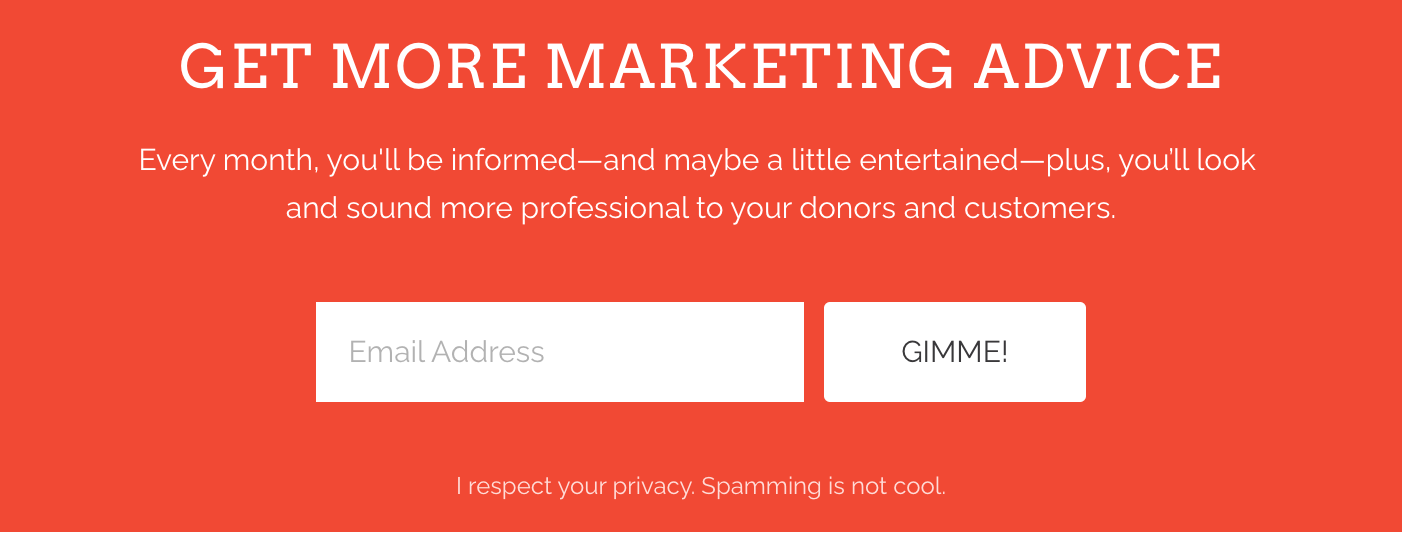
In a world where almost everything is accessible online, standing out and drawing people to your website is imperative to keep your mission moving forward. Gaining loyal customers or donors means keeping them in the know through your blog, newsletter, or eblasts. But first, you have to get their email address. 

Between all the blogs, online shops, and websites, all of our inboxes are already crowded with marketing emails asking for sales and donations, and the old classic “Sign up for my newsletter!” call to action just isn’t cutting it anymore. 

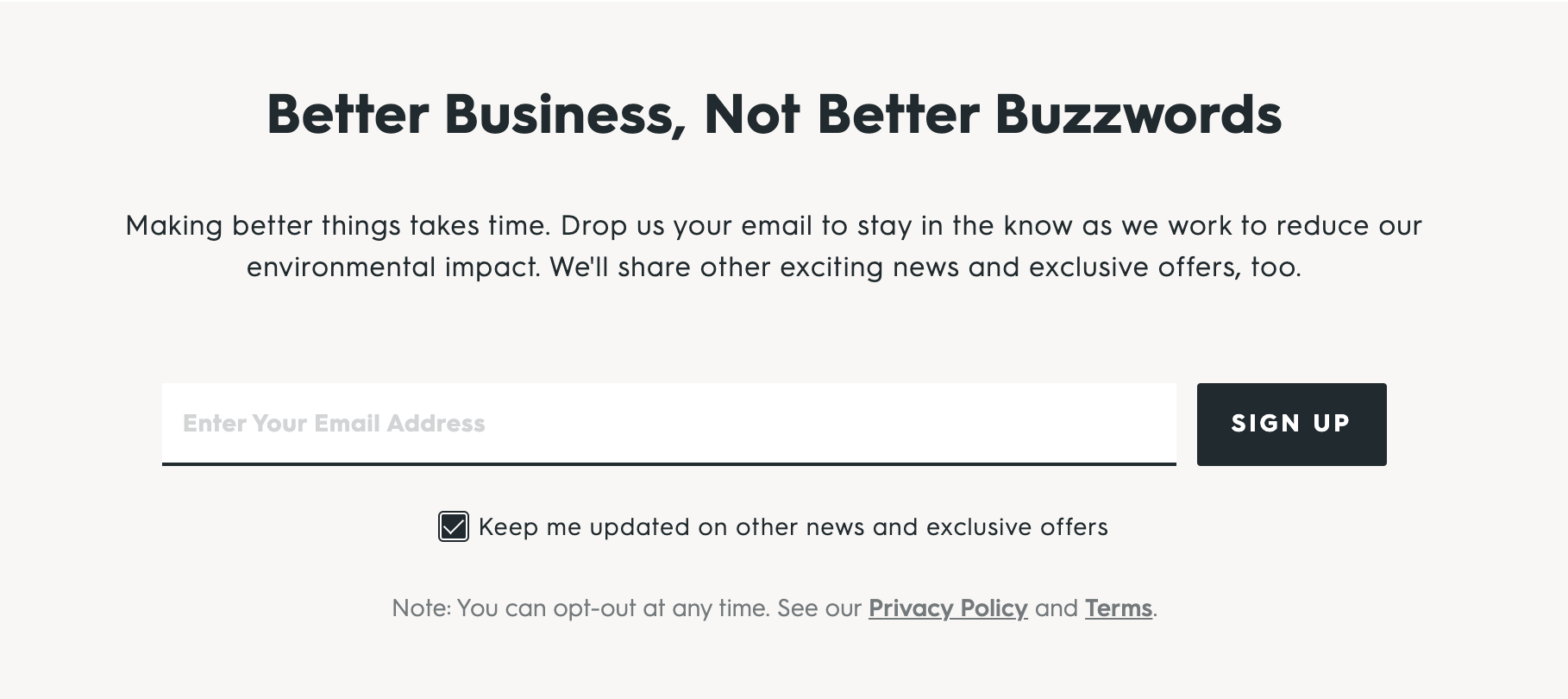
You need strong, creative, and enticing messaging on your opt-in forms so you can grab that email address, stay in touch with someone, and educate them on your mission. (An opt-in is when someone signs up to receive emails and ongoing communication about products, services, or information from your organization.)

Those fields that you see at the end of marketing emails or on websites asking for your email are opt-in forms, and utilizing them correctly is becoming more and more important. Consumers and donors are reluctant to add more clutter to their inbox, so your audience needs to know what they’re getting and why they’ll benefit right from the start. 

Here are eight creative alternative ways to get new email subscribers and not get sent to spam.

8 Creative Ways to Gain More Email Subscribers
Upgrade Your Website Experience

1) OFFER AN INCENTIVE IN RETURN

This is a big one! People love an incentive. Give them something in return for the email address they’re giving to you.

If you’re on the TOMS website shopping for shoes, you’d probably love to win a free pair (and who doesn’t love free things?!).

LeeAnne of Change the World by How You Shop hosts a different giveaway each month by collaborating with brands featured on her site. This is a great way to build your email list! 

(PSST—If you haven’t read LeeAnne’s recent guest post on turning customers and donors into passionate fans, you should definitely do that!)

This one from Plywood hits multiple points: It’s descriptive, offers an incentive, and is exclusive!

Giveaways, discounts, free downloads, and special products are all great incentives for enticing someone to join your mailing list.

Make your website work for you

2) DESCRIBE WHAT PEOPLE CAN EXPECT 

If you’re clear in your messaging about what people can expect to get from you (hopefully on a consistent basis), it’s more likely that they’ll opt-in. Tell them what to expect and how it’ll help them.

There’s full transparency in this example. You know just what you’ll get from Habitat for Humanity’s emails—how delightful!

Take a page from my own book! In this example, I state exactly what people can expect in their Inbox, how it will help them, and how often they’ll receive emails, too.

Thyme 4 Friends Newsletter Opt-In

This example from Thyme 4 Friends not only addresses the problems that its audience is facing, but tells them what to expect from upcoming emails.

Bonus, this one from Warby Parker is also super short and direct! 

Is Your Website Doing Its Job?

3) ENTICE PEOPLE AND MAKE IT FUN!

Fun, witty, creative wording grabs people’s attention and makes them more eager to hear from you. Make them laugh and they’ll be excited to open your emails.

Who doesn’t love Ben & Jerry’s? Their messaging is so fun!

Alex’s Lemonade Stand plays up their mission and their roots while encouraging people to join the fight against childhood cancer, a very worthy cause.

Punny and includes a fun quiz? Yes, please! And quizzes are very popular right now. While not directly calling for people to join their newsletter, Bombas still requires an email address to receive the results. (Most people do . . . and you get added to their email list at the same time.)

When appropriate, let some humor shine through to connect with your audience. It’s a welcome and fresh reprieve from more serious, cut and dry marketing efforts, especially among younger generations.

4) SHOW PROOF 

Throw a few stats or social proof in the mix. This makes you more credible to potential donors and customers and helps convince them that they need to stay informed about your organization.

Highlighting how many subscribers you already have, as Cru does here, can be a good way to grab people's attention and make them want to be part of your crowd.

Girl Scouts demonstrates that their content is proven to help you, which can make parents more curious as to what they have to say.

avoid these common website mistakes

5) KEEP IT SHORT AND SWEET

Keep it simple! Our eyes can glaze over long paragraphs, so keep it to a minimum. You want them to get the gist quickly. Try using just a few compelling key words to convey your point and get those email subscribers.

Everyone wants to actually enjoy reading their emails, right? The Good Trade has a simple, clean opt-in form.

Also from The Good Trade, this one highlights that you can expect uplifting content in just one sentence. We all want to hear more good news these days.

The two examples above are also great because they convey that their content is light and enjoyable in addition to beneficial.

So Worth Loving wants you to know that they are there to help you through the hard times, and “embrace” and “empower” are two incredible words that pack a punch.

Are You Making These Website Mistakes?


6) MAKE IT EXCLUSIVE 

Creating a sense of exclusivity makes people feel special, and incentivizes them to sign up so they don’t miss anything. FOMO is real!

By using the word “insider,” Causeartist makes their content exclusive and lets you know there are special things you’ll hear about by opting into their emails that you otherwise wouldn’t.

Baronfig highlights that you’ll be the first to know about their new products, limited releases, and more exclusive content if you sign up for their newsletter. And they keep it brief!

Similarly, State Bags also makes use of exclusivity here, and lets you know exactly what to expect from their emails. A win win!

Allbirds has a great form here. They describe what you can expect to see, have a catchy header, and highlight the exclusivity of joining their list. Sounds like more insider discounts!

7) PLAY TO EMOTION

This is especially effective if you’re a nonprofit. Appeal to people’s emotions. Why should they care? What do they need to know about? How will your emails keep them informed?

This one from Thorn is simple in design yet still descriptive. It asserts their mission clearly and appeals to a supporter’s values.

New Story Charity makes sure potential donors know that 100% of their donations really go to helping families in need and encourages people to stay in the know so they can be part of the solution.

The call to action in Malala Fund’s newsletter form is super gripping and impactful. It makes you want to step up and join the fight.

spread your mission farther with your website

8) INSPIRE YOUR AUDIENCE 

Use empowering and inspiring messaging that will make people want to be a part of your mission—and stay up to date on it!

Goodgigs uses action-forward, empowering messaging to gain more subscribers. (And they’re upfront with how often people can expect to receive emails!)

BuildOn’s method here is clear, informative, and powerful. They’re letting you know that by joining their email list, you’re becoming part of something big and impactful.

Simple, effective, brief. Preemptive Love cuts right to the chase and further demonstrates their mission, inspiring people to take action.

 A Few More Tips for Getting More Emails

Here are a few more tips to consider when formulating the perfect opt-in messaging:

  1. Tell people how many emails they’ll get. Remove the fear of constant spam by being straightforward with how many emails you’ll send them over a specific time, or even give them an option! (ex: Receive weekly updates.)

  2. Match your messaging to the page people land on. If your form is on a blog post, personalize it to the content they’re currently reading. Since they’re already loving what they’re seeing, this will increase chances that they sign up for future emails.

  3. Make your call to action (CTA) button clear and creative. Avoid the typical “Subscribe” or “Enter” text on your button and jazz it up to match your organization’s mission or personality! 

  4. Have multiple points of capture on your website. Keep a form on the bottom of your home page, at the end of your blog posts, anywhere you can! There should be several of them sprinkled throughout your site since people will navigate your website in different ways.

  5. Don’t ask for a ton of info. The more info you ask for, the less sign-ups you’ll receive. It’s best to just ask for a first name and an email, or just an email address. 

  6. Conduct testing. Try a few different things out. What works for one audience might not work for another, so do some tests and see what performs best.

Now, go forth and get those emails! Your message is worth spreading as far and as wide as possible, so avoid “Sign up for our newsletter” and, instead, highlight the aspects that make your work unique.


PIN THIS POST FOR LATER:

Between all the blogs, online shops, and websites, all of our inboxes are already crowded with marketing emails asking for sales and donations, and the old classic “Sign up for my newsletter!” call to action just isn’t cutting it anymore. Here are e…

Kristi Porter, founder of Signify

I’m Kristi Porter, and I help cause-focused organizations understand and execute effective marketing campaigns so they can move from stressed to strategic. Your resources may be limited, but your potential isn’t. Whether you’re a nonprofit, social enterprise, or small business who wants to give back, I’ll show you how to have a bigger impact.


This post was co-written by Kristi Porter and Megan Westbrook.

5 Lessons from 5 years As a Solopreneur

I can’t believe it, but this little experiment called Signify turns five years old this month!

This business was born out of a desire to help nonprofits and social enterprises have a bigger impact. After years of volunteering and freelancing for organizations and causes I believed in, I saw how many of them struggled with their marketing and communications. They had so much potential, but either didn’t have the know-how or the manpower to move their mission forward through marketing. I knew that’s where I could help.

And over the past five years, it’s been an absolute privilege to assist social impact organizations in increasing their sales and donations, building larger audiences, and doing more good.

But it hasn’t always been an easy and it hasn’t come without its costs. Being an entrepreneur is not for the faint of heart, and I certainly have more gray hair than I did five years ago!

Recent studies I’ve read say that only 50% of businesses make it this far, and there are days when I clearly understood why. I’d be lying if I didn’t ask myself more than once if this was all worth it. Being the one who makes all the decisions—and all the mistakes—can be exhausting, and there are times when I would’ve just preferred to show up to someone else’s office and collect a paycheck.

However, my mission and my “why” continue to inspire me every day to show up for my clients. I still deeply believe in what I do and the reason I do it, and am grateful to be a part of their story and the difference they make for others. For that reason, I’m here not only today, but hopefully for years to come.

And though there are a heck of a lot of pearls of wisdom I could share (and pitfalls I could tell you to avoid), here are just five of the lessons I’ve learned over the past five years.

5 Lessons From 5 Years As a Solopreneur

1) When Your Motivation Wanes, Your “Why” Picks Up the Slack.

I mentioned this earlier, but being an entrepreneur is hard work. You don’t just have an idea, launch a website, and find yourself sipping cocktails on the beach weeks later with loads of cash to spare . . . no matter what you see on Pinterest.

There are lots of days I questioned my decision to start this business. As a solopreneur, I make all the decisions and the buck always stops with me. Some days I wanted to give up and just find a job where I could punch a clock and collect a paycheck. But I didn’t because my “why” kept me going.

Motivation is fleeting, but if you have a clear and powerful reason that you should show up each day, that’s what will actually drive you and make the headaches and heartaches worth it. I know the difference I want to make (and do make) for nonprofits and social enterprises, and that keeps me going because I feel that purpose deeply and want to live it out.

Look and Sound More Professional

2) Your Brand Message is Everything.

First of all, if this is a new term for you, let’s clarify: Your brand message is what you want people to understand about your mission. And your brand voice is how you communicate your message.

In working on so many different projects for social impact organizations over the years, I kept seeing the issue of brand messaging crop up. Basically, as founders and entrepreneurs, we all reach a point where we can’t see the forest for the trees.

We begin by sharing our vision with friends and family who are willing to listen to our story and dream with us of what could be. But as we grow and bring others into the mission, we have less time to get our message across and we can’t distinguish what is most important and relevant for this new audience.

The result is confusion, stumbling over our words, rambling, or just a lack of clarity for how this new person fits in other than, “Show me the money.”

So, it is utterly essential to define your brand message, making it clear and compelling for the listener. Once you can express this idea in a way that resonates with your audience, you turn customers and donors into evangelists, which allows you to expand your mission.

Psst—need help clarifying your brand message? I’m here for you!


3) Your Organization Will Only Grow If You Do.

Investing in yourself is critical for convincing others to invest in you. People want to partner with those who are headed somewhere, and growing personally and professionally is a big part of that.

To become the industry leader, the subject matter expert, and the person that boards, donors, and customers put their faith in, you need to be focused on learning and becoming even better at what you do.

This could include:

  • Finding mentors.

  • Taking courses.

  • Reading books.

  • Listening to podcasts.

  • Learning from peers.

  • And much more!

Seek out educational opportunities wherever you can.

Additionally, part of your growth should come from observation. To move forward, you must take time to reflect.

Too many leaders are only focused on what’s new and next, and don’t take the time to learn from what’s already happened. And, as the saying goes, those who don’t learn from the past are doomed to repeat it.

This is one big reason I plan quarterly retreats. Not only do I use the time for planning, but I look back to see what’s working and what needs to change. I don’t want to keep making the same mistakes. I consider this another opportunity for growth.

Small Business, Big Reputation

4) Strategy Beats Tactics Every Time.

There’s a reason that marketing is so overwhelming for people: There’s always something new to learn or try. It’s a lot to keep up with! Heck, even those of us who do this professionally can’t know everything.

That’s why you need to prioritize strategy over tactics.

For example, social media is always a big topic of conversation with peers and clients. Which platforms should you be on? What do you post? When do you post? What’s the latest change to the algorithm? It’s like a moving target.

But you know what? I personally don’t prioritize it. It’s not that it’s not important, but it’s just not a big part of Signify’s strategy at this time. Instead, for my business model, I primarily focus on content, search engine optimization (SEO), and word-of-mouth referrals. My time is spent in those areas rather than worrying about Facebook’s most recent changes.

Will that always be the case? Probably not, but right now, that’s my plan . . . and I use that word literally. I put my time and energy into those tactics because they are built into my strategy for growth.

If you don’t have a strategy and plan, you’ll always be stressed by tactics. And when marketing distractions pop up, you’ll have no filter to make decisions. So, start with a strategy and let that determine your tactics.


5) Be Courageous Enough to Make the HARD CHOICES.

I wrote an entire post on this topic in January, but part of being a leader means making the tough decisions.

For me, it meant getting a part-time job—and that was an excruciating decision. There was a lot of fear, worry, and anxiety. And even though the basis came from chronic health issues, I still felt like a failure in many ways.

But once the decision was made, I felt like a huge weight was lifted off my shoulders. And I happen to love the team I get to work with now. Plus, I’m able to serve the social impact community in an entirely new way as well as continue to run Signify. #WinWin

There have been plenty of other decisions over the past five years that haven’t had the outcomes I’d hoped, but that’s the gig, right? There’s always some measure of risk, some unpopular decisions, and some times when things don’t go in our favor. It’s what we signed up for as entrepreneurs, founders, and leaders.

But I’d encourage you to be courageous. Gather the facts, calculate the risks, trust your instincts, and take the leap. You’ll never get it 100% right, but that’s also part of the adventure. And, after five years, I can certainly tell you that it’s still an adventure!

What lessons have you learned in founding or running a nonprofit or social enterprise?


PIN THIS POST FOR LATER:

This business was born out of a desire to help nonprofits and social enterprises have a bigger impact. After years of volunteering and freelancing for causes, I saw how many struggled with their marketing. They had so much potential, but either didn…

Kristi Porter, founder of Signify

I’m Kristi Porter, and I help cause-focused organizations understand and execute effective marketing campaigns so they can move from stressed to strategic. Your resources may be limited, but your potential isn’t. Whether you’re a nonprofit, social enterprise, or small business who wants to give back, I’ll show you how to have a bigger impact.


4 Tips for Turning Your Customers and Donors into Passionate Fans

If you haven’t heard of Change the World By How You Shop, you’re in for a real treat! LeeAnne McCoy has been a member of the Signify community since the early days, and I can testify that she and her ethical shopping guide are dedicated to helping people find products that they’ll not only love, but allow them to make a difference.

And in the course of researching brands to include in her guide, LeeAnne has had dozens of conversations with makers and founders, and has unique insight into why some brands can turn their customers and donors into passionate fans while others simply sell their goods.

I’ve asked her to share those differences with you in the hopes that you can also make the leap from store to sensation. Because when you can successfully turn customers into advocates, you’ll be able to take your mission to a whole new level and make a bigger impact.

4 Tips for Turning Your Customers and Donors into Passionate Fans

A few months ago, one of Mercy House Global’s homes for teenage moms in Kenya burned to the ground. And in a passionate response to the tragedy, I watched the bars quickly fill up on their online fundraising campaign. Within a matter of hours, they raised thousands of dollars—enough to replace all the items lost in the fire including clothes, beds, and more for the young moms and their little ones.

And recently, Shelley, founder of Papillon, was visiting Haiti. She shared with her Facebook followers some of the medical needs of the artisans who work for her. Before she got on her flight home the next morning, she was able to tell her employees that people they had never met had donated enough to cover all their medical expenses. 

These kinds of stories are actually common for these two nonprofits. Not only do they quickly raise funds for their needs, but they also frequently sell out of newly released fair trade products. Why? 

They both have a very loyal following of customers and donors who are as passionate about their mission as they are. 

So, how can you turn your customers and donors into fans as loyal as those who follow Mercy House Global and Papillon? Below are four ways nonprofits and social enterprises turn followers into passionate fans.

TELL A BETTER BRAND STORY

1. Be Real

Lauren, owner of the small ethical online boutique Naupaka, is not afraid to admit her mistakes. As a one-woman-show, she sometimes sends out newsletters twice or sale notices on the wrong day and then sends a funny apology email with the correction.

Her transparency makes shopping from her online store feel like shopping at your local brick and mortar.

Shelley from Papillon is also very transparent about her challenges in running a nonprofit, as well as her relationships with her employees. She recently posted a live cell phone video on Facebook of the Papillon workshop in Haiti. Watching the banter, the smiles, and even those who ducked down because they were too shy to be on camera was like being there in person. This did far more to inspire support for Papillon than any professionally recorded video could have done.

Your supporters are inundated constantly with advertisements and requests for donations, but a sense of authenticity can make your requests stand out from the crowd. 


2. Be Personal

Because of the pandemic, connecting in person with your followers may not always be possible, but there are numerous ways to personally connect from a distance.

A handwritten note goes a long way. I treasure the many handwritten notes I have received from various social enterprises and artisans I support through Change the World by How You Shop. A personal email can have the same impact.

Facebook offers some great opportunities for connecting personally with your followers. Shop with a Mission has had to close the doors of their fair trade store in California all year because of COVID-19. However, they started weekly Facebook live shows where they laugh, tell jokes, host giveaways, and show off products. By watching the live shows, both local and out-of-state followers get to connect personally with the owners and employees.

Several other fair trade shops have utilized Facebook to introduce international artisans via live video. Others, like Mercy House Global, have created an “insiders” group which invites a small group of their fans to be a special part of their mission. Shelley from Papillon goes one step further and “friends” customers and donors on her personal Facebook page.

People are more likely to support organizations they have a personal connection to. Thus, the common joke about “Mom is my biggest fan.” Whatever method you employ, keep looking for ways to help your followers feel like they are personally invested in you and your mission. 


3. Be Specific

Recently, I purchased a basket from Eternal Threads, a nonprofit fair trade organization. Beautiful as the handwoven basket is, I bought it not just for its beauty or because I wanted to support a generic cause such as fighting poverty in Africa. I bought it because it was Rosemary’s basket. From following Eternal Threads, I had learned Rosemary’s story, how she lost both her parents and was raising her younger siblings and selling baskets to pay their school fees. I bought her basket to remind me to pray for Rosemary and because she inspires me. 

Even when you cannot share names or pictures, you can still be specific: 

Likewise, Papillon recently shared that one of their employees’ sons was HIV positive. Because of the stigma around HIV, they could not share names or pictures, but they shared enough details of the story to inspire many to donate.  

And when Mercy House Global started their fundraising campaign after the fire, they raised funds for specific needs, one at a time, such as mosquito nets, beds, and toddler clothes. Each individual need they posted was quickly provided for by donors who understood their mission, what was being asked of them, and what the result would be from their contribution.


4. Follow Up

Giving frequent updates on your supporters’ impact will strengthen their commitment to your mission. Papillon sends frequent updates to the donors who contributed to their employees’ medical needs. And Mercy House continues to send updates on the teen moms who lost their homes in the fire and the new homes they hope to purchase for them.

Eternal Threads, who sells Rosemary’s baskets, continues to share her story. Recently, her little brother was robbed and beaten on the way to work and his cell phone and bicycle were stolen. When they shared the need for donations to cover his medical care, it was simply one more chance to be part of an ongoing story.  The update and personal thank you from Rosemary they forwarded to donors ensured they would be quick to participate in the future as well.

Every little step you take towards having authentic, personal, specific, and ongoing communication with your followers will help build their relationship with you. And nurturing those relationships over time will turn customers and donors from occasional supporters into passionate fans who will be vital partners in accomplishing your mission.

It’s certainly worked for the organizations above. How will you make it work for you?


LeeAnne with Rosemary's products.jpg

LeeAnne McCoy is a mother of six young children and a piano teacher in Washington State. In her "spare time," she is also the creator of Change the World by the How You Shop, an online ethical shopping guide which makes it easy to find products from brands that go beyond ethical and fair trade to change lives around the world. Her mission is to support those brands by helping more people discover their products.

Facebook I Pinterest


PIN THIS POST FOR LATER:

In the course of researching brands to include in her ethical shopping guide, Change the World By How You Shop, LeeAnne McCoy has had dozens of conversations with makers and founders, and has unique insight into why some brands can turn their custom…

Kristi Porter, founder of Signify

I’m Kristi Porter, and I help cause-focused organizations understand and execute effective marketing campaigns so they can move from stressed to strategic. Your resources may be limited, but your potential isn’t. Whether you’re a nonprofit, social enterprise, or small business who wants to give back, I’ll show you how to have a bigger impact.